Best Over-the-Toilet Storage for Small Bathrooms
This post may contain affiliate links. As an Amazon Associate we earn from qualifying purchases. See our affiliate disclosure.
In a small apartment bathroom, the wall above the toilet is often the only storage space nobody is using. The vanity is tiny, the floor is crowded, and towels and toilet paper end up piled on the tank lid. That is why the best over the toilet storage for small bathroom apartment living is so popular: it turns dead vertical space into a home for everyday items with nowhere else to go.
The catch is fit. Toilets are not all the same width, and a shelf that looks slim in a product photo can crowd the sink in real life. This guide compares six types by fit, cost, and renter safety. Prices are typical US ranges, checked Nov 2026 — a budgeting guide, not a quote. Picks are by type and fit, not lab-tested winners.
TL;DR: The Best Over-the-Toilet Storage by Type
A freestanding etagere shelf is the best over-the-toilet storage for most small apartment bathrooms: no drilling, holds the most, and moves with you. A wall-mounted cabinet suits drill-friendly homes that want toiletries hidden; a leaning ladder shelf suits unusually wide tanks. Measure tank width, tank height, and wall clearance before ordering.
At a Glance: 6 Over-the-Toilet Storage Types Compared
| Storage type | Width / fit | Cost range* | Renter-safe? | Best for |
|---|---|---|---|---|
| Freestanding etagere shelf | 24–36 in; straddles tanks to ~20 in | $30–$120 | Yes | Most small bathrooms |
| Wall-mounted cabinet | 16–24 in; above tank | $40–$150 | No — screws | Hiding toiletries |
| Leaning ladder shelf | 18–26 in; leans on wall | $35–$110 | Yes | Wide or awkward tanks |
| Over-tank basket organizer | On tank lid; ~16–20 in | $12–$35 | Yes | Tiny budgets |
| Tension-pole caddy | Pole; ~10–12 in baskets | $25–$70 | Yes | Corners beside toilet |
| Over-toilet cabinet, doors | 24–32 in; 8–10 in deep | $60–$200 | Often no | Shared bathrooms |
1. Freestanding Etagere Shelf: Best Overall
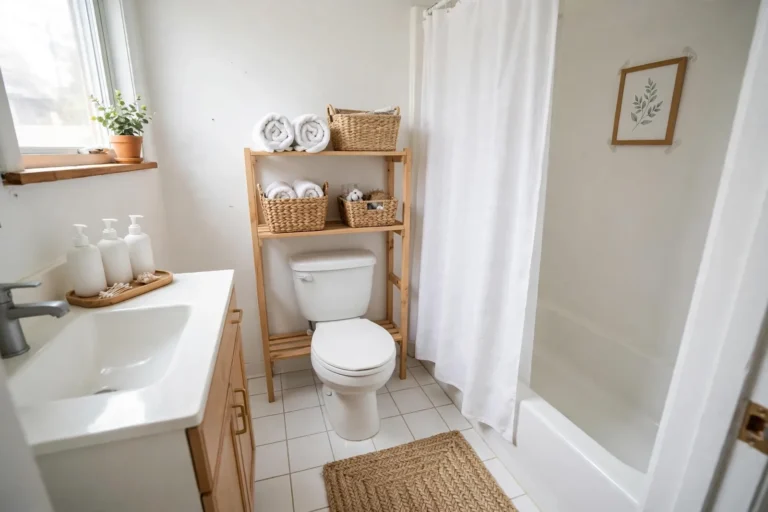
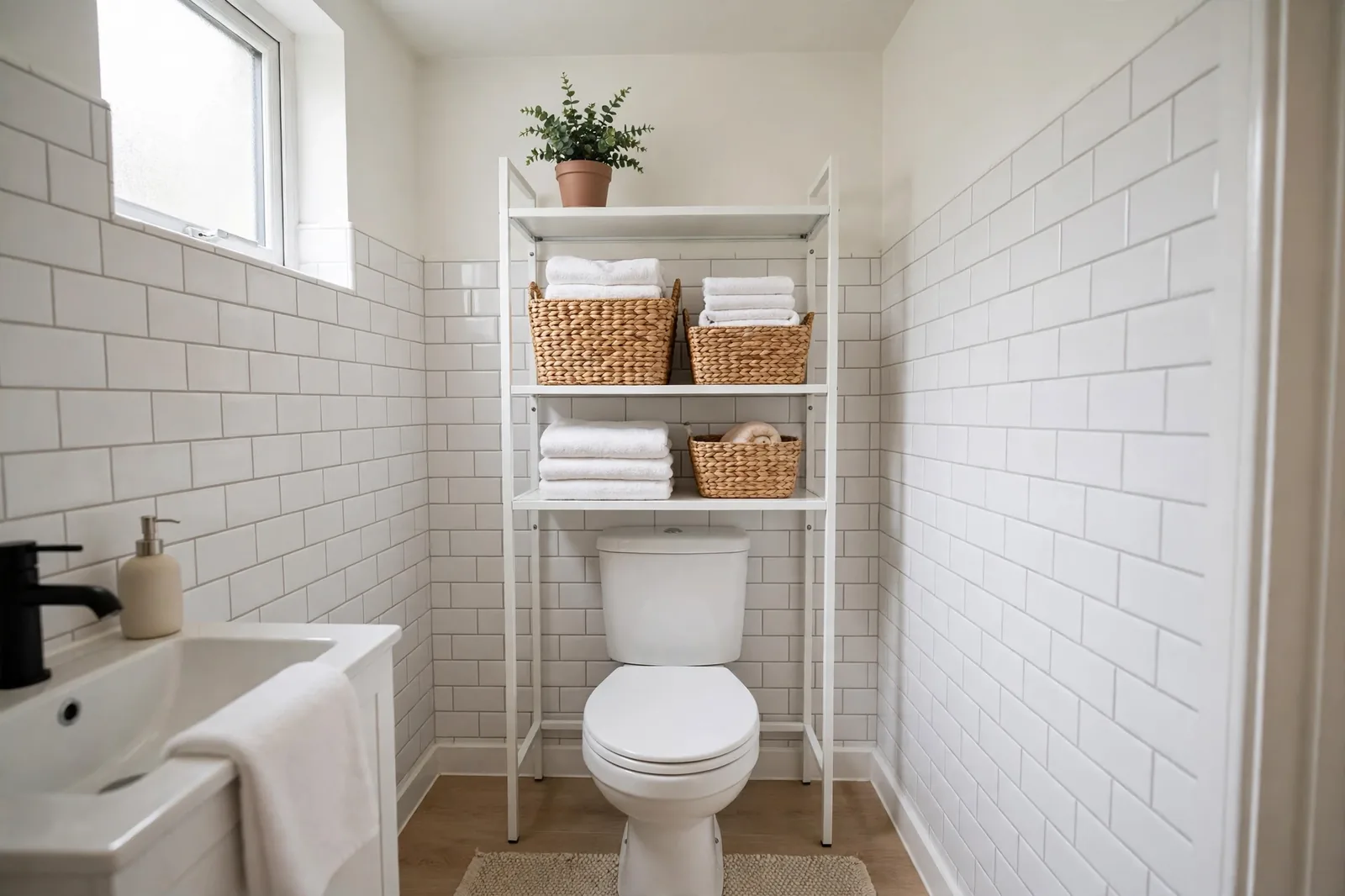
A freestanding etagere is a tall, narrow unit with two legs that stand on the floor either side of the toilet, so the shelves sit directly above the tank. It adds three or four shelves without a single screw, and works in almost any rental.
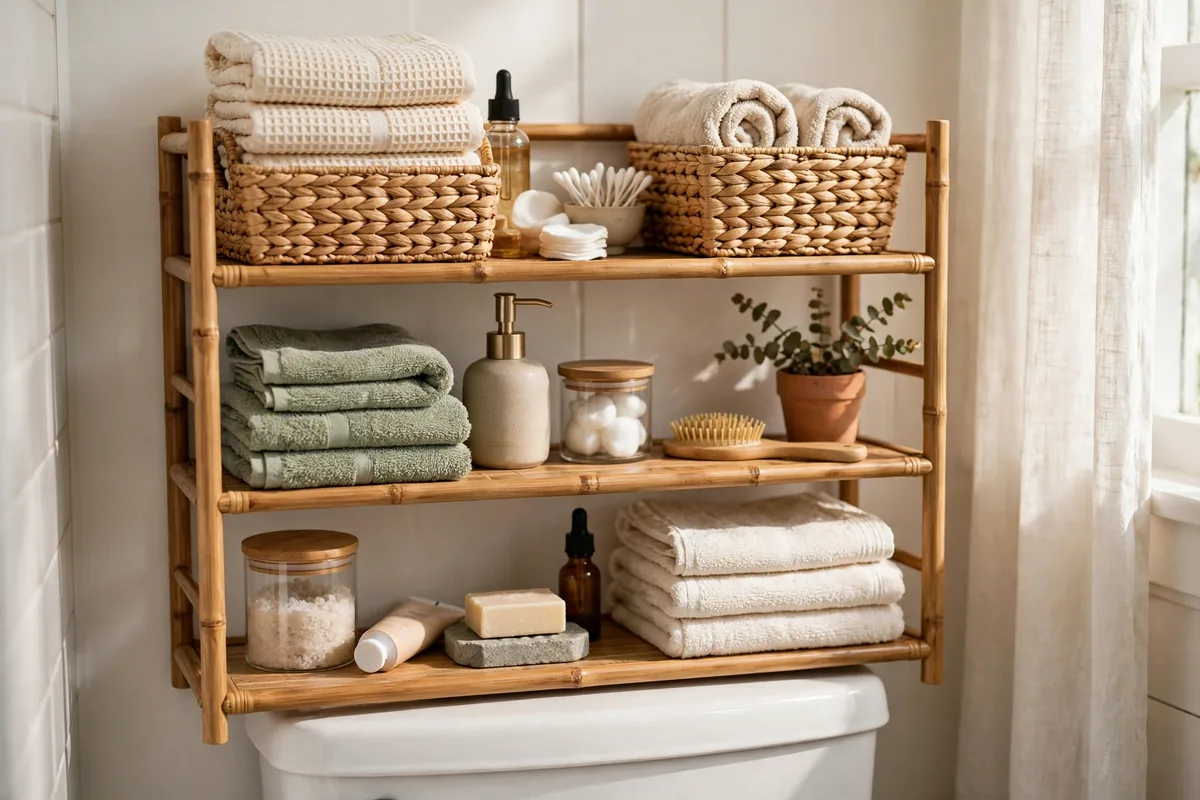
Fit: Most etageres are 24 to 36 inches wide, with the gap between the legs sized to clear a standard 20-inch tank. Check the inside leg-to-leg measurement, not just the overall width. Depth is usually 8 to 10 inches, keeping shelves clear of the lid. Cost: $30 to $120, plus $15 to $30 for baskets, usually sold separately. Watch out: top-heavy units can wobble on uneven tile — keep heavy items on the lowest shelf. Shop freestanding over-toilet etagere shelves on Amazon.
2. Wall-Mounted Cabinet: Best for Hiding Clutter
A wall-mounted cabinet hangs above the toilet like a small medicine cabinet, with one or two doors hiding everything inside. It is the neatest option here: cleaning supplies, medicines, and spare toiletries disappear behind closed doors.
Fit: Typically 16 to 24 inches wide and 5 to 8 inches deep. Mount the bottom at least 6 inches above the tank lid so the lid still lifts off. It works above toilets too wide for a freestanding frame. Cost: $40 to $150. Best for: homeowners, or renters whose landlord allows small screw holes — check your lease first. Watch out: cabinets hold less than they appear to, so measure the interior depth before buying tall bottles. Shop wall-mounted bathroom cabinets on Amazon.
3. Leaning Ladder Shelf: Best for Awkward Layouts
A leaning ladder shelf is a tapered unit that rests against the wall above and behind the toilet, with shelves that get deeper toward the bottom. It forgives uneven walls and toilets close to a corner, where a freestanding etagere will not fit.
Fit: Usually 18 to 26 inches wide and 12 to 16 inches deep at the base, tapering to about 6 inches at the top. The bottom shelf holds folded towels; the top shelves suit small items only. The feet need a few inches of clear floor behind the toilet. Cost: $35 to $110. Watch out: ladder shelves hold less weight than they look like they should — keep heavy items low. Shop leaning ladder shelves for bathrooms on Amazon.
4. Over-Tank Basket Organizer: Best Budget Pick
An over-tank basket organizer is a small basket or tray that sits directly on the toilet tank lid. It holds two or three spare toilet paper rolls, a phone, or a small plant — nothing more, and that is the point. For under $20, it solves the most annoying small-bathroom problem: nowhere to put the spare roll.
Fit: Most organizers are 16 to 20 inches wide, made for a flat tank lid about 7 to 8 inches deep. If your lid is curved or sloped, a basket will slide — measure the flat area first. Cost: $12 to $35. Watch out: anything on the tank gets splashed and dusty, so keep it to spare rolls and items you can wipe clean. Shop over-tank basket organizers on Amazon.
5. Tension-Pole Caddy: Best for Dead Corners
A tension-pole caddy is a floor-to-ceiling pole with three or four small baskets that slide up and down it. It does not go over the toilet at all — it goes beside it, in the narrow gap between the toilet and the wall or vanity that is otherwise wasted.
Fit: Poles adjust to ceilings from about 7 to 9 feet tall, and each basket is roughly 10 to 12 inches wide. You need a clear vertical run of floor space about 12 inches square. It grips by tension, so flat ceilings work best; textured ceilings can make it slip. Cost: $25 to $70. Watch out: overloading one basket tilts the whole pole — distribute weight evenly and re-check tension every few months. Shop tension-pole bathroom caddies on Amazon.
6. Over-Toilet Cabinet With Doors: Best for Shared Bathrooms
An over-toilet cabinet with doors is the bigger sibling of the freestanding etagere: a floor-standing unit with enclosed storage instead of open shelves. It suits shared bathrooms, where everyone has their own products to hide.
Fit: These units are 24 to 32 inches wide and deeper than open etageres — usually 8 to 10 inches — so they need more clearance in front of the toilet. Check the door swing: an outward-opening door can hit the sink or the bathroom door. Cost: $60 to $200. Watch out: many of these units still need wall anchoring for stability, so they are not always renter-safe — check before you buy. Shop over-toilet cabinets with doors on Amazon.
How to Measure Before You Buy
Five minutes with a tape measure prevents the most common mistake: a unit that arrives, does not fit, and goes back. Take these five measurements first.
- Tank width: Measure the widest point — usually about 20 inches, but 16 to 24 inches is common. A freestanding unit’s inside leg-to-leg width must be at least 1 inch wider.
- Tank height: Measure from the floor to the top of the tank lid. The lowest shelf must clear this height, or the lid will not lift off.
- Depth, wall to tank front: Freestanding legs need floor space behind or beside the toilet base — if the toilet sits tight to the wall, there may be none.
- Clearance to the nearest obstacle: Measure to the sink, vanity, or door swing. A unit 10 inches deep still needs room to stand and turn in front of it.
- Ceiling height and anything above the toilet: Check for shelves, pictures, and light fixtures — a 70-inch etagere will not fit under a 60-inch shelf.
One free final check: sit on the toilet and reach for where the lowest shelf would be. If you have to twist or stand up, the unit is too high for daily use. For a wider refresh, see our guide to small bathroom decor ideas for renters.
What to Avoid
- Buying by overall width alone. The number that matters is the inside leg-to-leg width. A 28-inch unit with legs 19 inches apart will not straddle a 20-inch tank.
- Blocking the tank lid. If a shelf sits less than 2 inches above the lid, you cannot lift it off to fix a running toilet.
- Overloading the top shelf. Tall, top-heavy units tip. Heavy items belong on the lowest shelf; light decor goes up high.
- Ignoring humidity. Raw MDF and unsealed particleboard swell and sag in a steamy bathroom. Choose metal, bamboo, sealed wood, or water-resistant finishes.
- Drilling in a rental without permission. A wall-mounted cabinet or anchor can cost you part of your deposit. If your lease bans holes, stick to freestanding, leaning, or tension-pole options.
- Filling every shelf. A unit packed to the edges makes a small bathroom feel smaller. Leave one shelf partly empty.
How to Style It Without Shrinking the Room
Use one basket per shelf, in the same material and colour, so the unit reads as one piece of furniture instead of a pile of products. Roll towels instead of folding them — they take up less space and look intentional. Put everyday items on the lowest shelf and decor on the top. In a light bathroom, white or natural baskets keep the unit from crowding the space. For the rest of the room, browse the small bathroom category.
FAQs: Over-the-Toilet Storage for Small Bathrooms
What size over-the-toilet storage fits a standard toilet?
A standard toilet tank is about 20 inches wide and 27 to 28 inches tall to the top of the lid. Look for a freestanding unit whose inside leg-to-leg width is at least 21 inches and whose lowest shelf clears your tank height by 2 inches or more.
Will over-the-toilet storage work in a rental apartment?
Yes, if you choose a type that needs no drilling. Freestanding etageres, leaning ladder shelves, over-tank baskets, and tension-pole caddies all work without holes and move with you when your lease ends. Wall-mounted cabinets usually need screws, so get your landlord’s permission in writing first.
How much weight can an over-the-toilet shelf hold?
Most freestanding etageres are rated for 10 to 25 pounds per shelf, with metal frames at the higher end. Check the weight limit in the listing rather than assuming, and keep heavy items on the lowest shelf.
Is it safe to put storage over a toilet tank?
Yes, as long as the unit clears the tank lid by at least 2 inches and nothing heavy rests on the lid. Freestanding units that straddle the tank are safest, because nothing touches the lid.
What should I store on over-the-toilet shelves?
Spare toilet paper, hand towels, and toiletries in baskets — the items you reach for every day. Keep medicines and cleaning products in a closed basket or cabinet, especially in a shared bathroom. Avoid storing anything you would not want splashed.
Do I need to anchor an over-the-toilet shelf to the wall?
Manufacturers recommend anchoring tall freestanding units, especially with small children around. In a rental, a removable adhesive anti-tip strap adds stability without drilling. If the unit wobbles even when empty, return it.
The Bottom Line
For most small apartment bathrooms, a freestanding etagere shelf is the best over-the-toilet storage: renter-safe, holds the most, costs $30 to $120, and moves with you. If you need hidden storage, a wall-mounted cabinet is neater — as long as your lease allows it. If your toilet is unusually wide or the layout is awkward, a leaning ladder shelf or tension-pole caddy solves it without a single hole in the wall.
Measure first, buy second, and style with matching baskets. Five minutes with a tape measure is the difference between storage that transforms your bathroom and a unit that goes straight back in the box. For the rest of the room, start with our guide to small bathroom decor ideas for renters.