Peel-and-Stick Wallpaper in a Small Bathroom: What Actually Holds Up
This post may contain affiliate links. As an Amazon Associate we earn from qualifying purchases. See our affiliate disclosure.
Peel-and-stick wallpaper in a small bathroom sounds like a renter’s dream: big impact, no paste, no landlord drama. But bathrooms are the hardest room in the house for removable wallpaper — steam, splashes, and tight corners test every seam. The good news is that peel-and-stick wallpaper can hold up in a small rental bathroom, but only if you pick the right material, put it in the right spot, and install it the right way. Pick wrong and you’ll be re-sticking curling corners within a month.
We’ll cover which peel-and-stick wallpaper types survive moisture, where to install it (and where to skip it), how to measure so you buy the right number of rolls, real cost ranges, and how to remove it cleanly at move-out. Everything here is renter-safe and deposit-safe.
Quick Answer
Vinyl peel-and-stick wallpaper holds up best in a small bathroom — it resists steam and wipes clean. Keep it off shower walls and away from direct splashes. Measure first, buy 10% extra for pattern matching, and smooth from the center out. Budget $25–$60 per roll and 2–3 hours for one accent wall.
Peel-and-Stick Wallpaper in a Small Bathroom at a Glance
| Option | Cost | Time | Renter-safe? | Best for |
|---|---|---|---|---|
| Vinyl peel-and-stick (accent wall) | $25–$60 per roll | 2–3 hours | Yes | Moisture-prone bathrooms |
| Fabric peel-and-stick | $30–$70 per roll | 2–3 hours | Yes | Low-humidity powder rooms |
| Peel-and-stick tile decals | $10–$25 per pack | 1 hour | Yes | Backsplashes, small patches |
| Removable border strips | $12–$20 per roll | 30 minutes | Yes | Ceiling lines, wainscot tops |
Prices are typical US ranges, prices checked Nov 2026. One standard roll (about 17.7 in × 118 in) covers roughly 28 sq ft.
Will Peel-and-Stick Wallpaper Survive a Steamy Bathroom?
Short answer: yes, on the right wall, with the right material. The enemy isn’t water itself — it’s trapped moisture behind the paper and repeated steam cycles softening the adhesive. In a typical 5×8 ft rental bathroom (40 sq ft), the wall behind the vanity and the wall opposite the shower stay dry enough for removable wallpaper to last a year or more. The wall inside the shower stall and the first 12 inches around the tub are a different story: constant direct water will lift any peel-and-stick product, no matter what the packaging promises.
Ventilation matters more than brand. If your bathroom has a working exhaust fan, run it during every shower and for 20 minutes after — adhesion drops sharply in rooms that stay humid for hours. No fan? Crack the door and wipe the wallpapered wall dry after steamy showers. That one habit is the difference between wallpaper that lasts until move-out and wallpaper that peels by February.
What to avoid: installing peel-and-stick wallpaper on a wall with peeling paint, textured knockdown finish, or fresh paint less than 30 days old. The adhesive needs a smooth, fully cured surface. On rough texture it grips only the high spots and lifts within weeks.
The Types That Actually Hold Up (and the Ones That Don’t)
Vinyl peel-and-stick: the bathroom winner
Vinyl-coated peel-and-stick wallpaper is the safest pick for a small bathroom. The vinyl surface sheds water, wipes clean with a damp cloth, and resists the humidity swings of daily showers. Look for products labeled “vinyl,” “water-resistant,” or “washable” — and check the fine print for bathroom or kitchen use. Most quality vinyl rolls run $25–$60 and come in 17.7 in × 118 in rolls covering about 28 sq ft.
Fabric peel-and-stick: pretty, but only for dry bathrooms
Fabric-based removable wallpaper feels softer and hides wall imperfections better, but it absorbs moisture. It works in a powder room or a bathroom with a strong fan and an enclosed shower — and struggles in a small windowless bathroom where steam lingers. If your bathroom has no window and a weak fan, skip fabric and go vinyl.
What to avoid: uncoated paper peel-and-stick ($15–$35 per roll) — it wrinkles in humidity, stains from splashes, and can’t be wiped clean. Also avoid any “removable” wallpaper with no moisture rating at all. If the listing doesn’t mention bathrooms, kitchens, or humidity, assume it wasn’t tested for them. Stick to brands that explicitly list bathroom use — and read the 2- and 3-star reviews, where renters report what actually peeled.
Where to Put It — and Where to Skip It
In a small rental bathroom, one accent wall gives you the whole look for 1–2 rolls. The best candidates:
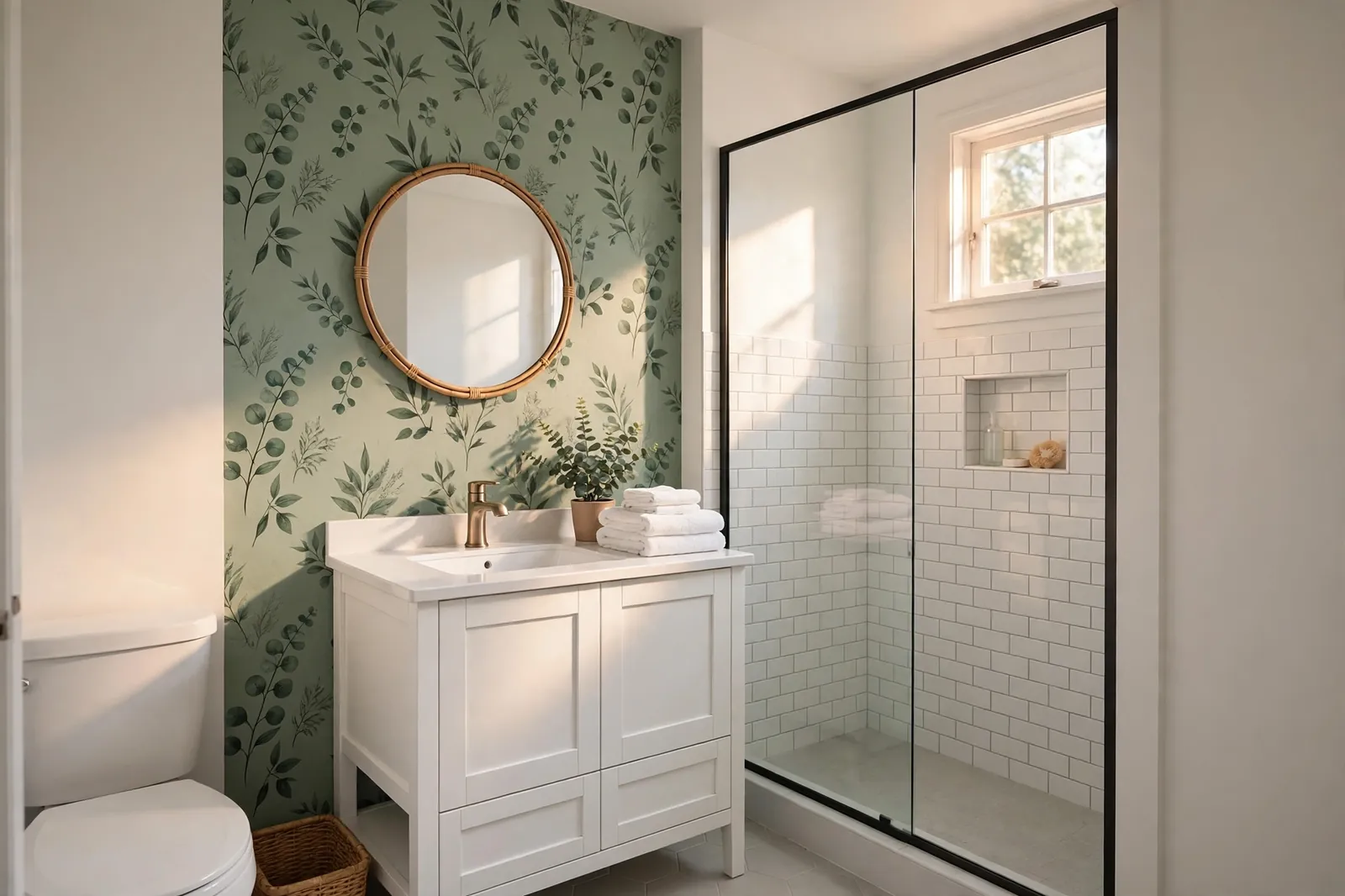
- The vanity wall: behind the mirror and sink. It’s the first thing you see, it stays dry, and it frames the room. A 5 ft wide vanity wall at 8 ft high needs about 40 sq ft — 2 rolls with pattern matching.
- The wall opposite the shower: usually the toilet wall or the door wall. Dry, visible, and easy to reach.
- Above the tile line: if your bathroom has a tile wainscot, papering the painted wall above it looks intentional and keeps the paper away from splashes.
Skip the wall inside the shower or tub surround, the ceiling directly above the shower, and any wall within 12 inches of the tub edge. Also skip walls with heavy texture or flaking paint — fix the surface first or choose a different wall. For more renter-safe ways to transform the room, see our small apartment bathroom decor ideas for renters.
How Much to Buy: Measure First, Then Order
Measure the wall’s width and height in inches, then divide by the roll coverage. A standard roll is 17.7 in wide × 118 in long (some brands are 20.8 in wide — always check the listing). For an 8 ft (96 in) ceiling, one roll gives you one full-height strip with about 22 in spare for trimming.
Worked example: a 60 in wide vanity wall. 60 ÷ 17.7 = 3.4, so you need 4 strips. Budget 2 rolls for a 5 ft accent wall and 3 rolls if the pattern repeat is over 12 inches. Always add 10% extra for pattern matching and miscuts, and buy all rolls from the same dye lot (same batch number) so the color matches.
What to avoid: ordering exactly the calculated amount. One bad cut or a misaligned pattern match can leave you a strip short — and a second order from a different dye lot may not match. The extra roll costs $25–$60; a mismatched wall costs the whole project.
How to Install Peel-and-Stick Wallpaper So It Stays Up
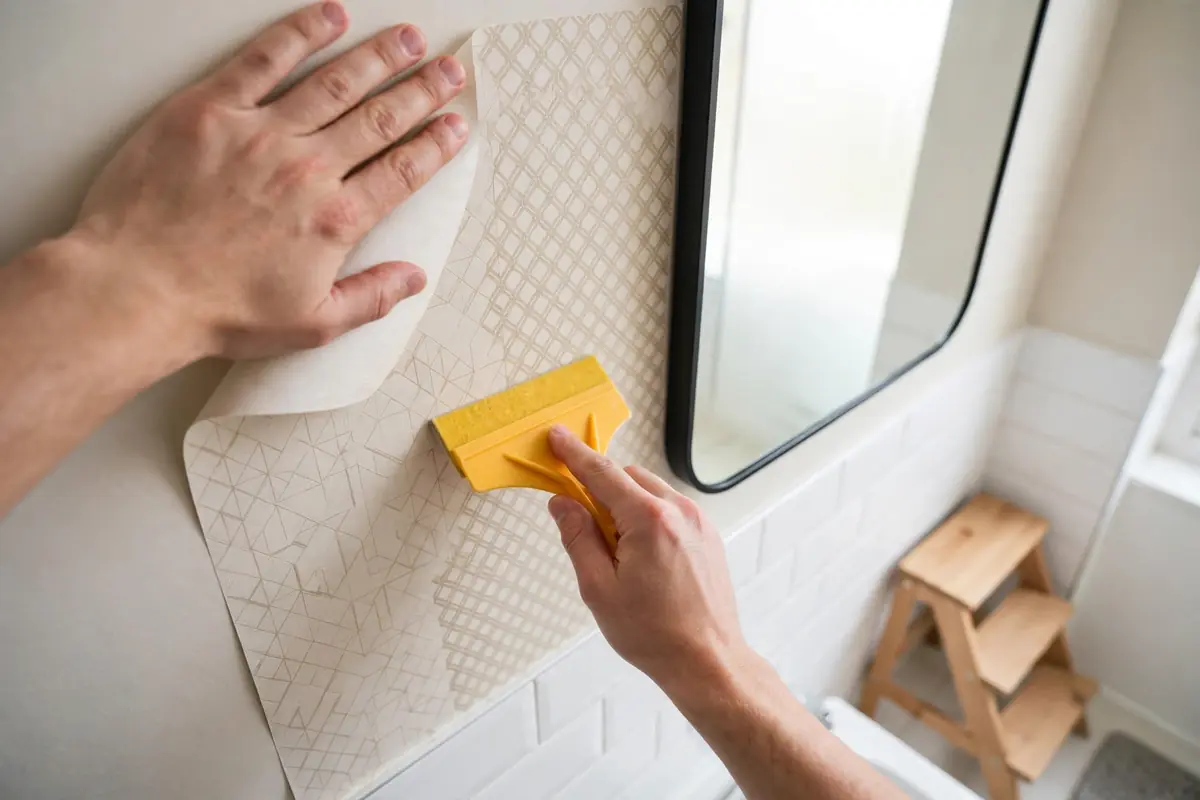
Installation is a one-afternoon job — 2–3 hours for a single accent wall, including prep. You need a smoothing tool or old credit card, a sharp utility knife, a level, a tape measure, and a step stool. A wallpaper smoothing tool kit runs $8–$15.
- Clean and dry the wall. Wipe it with a damp cloth and a drop of dish soap, then let it dry completely — at least 2 hours. Dust and soap residue are the top cause of peeling edges.
- Mark a plumb line. Use a level to draw a vertical pencil line one roll-width from your starting corner. Walls are rarely perfectly straight; this line, not the corner, keeps your strips vertical.
- Peel 12 inches, stick, smooth. Peel the backing down about 12 inches, align the top edge, and smooth from the center outward. Then peel the next 12 inches and repeat — never peel the whole strip at once or it will stick to itself. Match the pattern at eye level (around 5 ft high), where slight mismatches near the floor or ceiling are far less visible.
- Trim with a sharp knife. Cut along the ceiling, baseboard, and outlets with a fresh utility blade. Change the blade often — a dull blade tears vinyl and leaves ragged edges that lift. In very steamy bathrooms, run a thin line of clear removable seam sealer along the bottom edge and around outlets.
What to avoid: installing on a humid day or right after a shower. The wall must be bone dry, and the room should stay dry for 24 hours after install so the adhesive can set. Pick a day you can skip the steamy shower — or install in the morning and shower at the gym.
What It Costs: A Realistic Budget
For one 5 ft accent wall in a small bathroom, expect $60–$150 all-in: 2 rolls of vinyl peel-and-stick wallpaper ($50–$120), a smoothing tool kit ($8–$15), and a utility knife with spare blades ($5–$10) if you don’t already own one. A full small bathroom (two walls) runs $120–$250. If your whole bathroom needs a refresh on a tight budget, our under-$100 rental bathroom guide breaks down a full $89 makeover.
Removal: Getting Your Deposit Back
Removal is the part renters worry about most, and it’s the easiest step. Start at a top corner, peel slowly back on itself at a low angle, and use a hair dryer on low heat for 20–30 seconds on any stubborn section — heat softens the adhesive. Wipe the wall with a damp cloth afterward; any faint residue comes off with warm soapy water. Vinyl removes cleanly from eggshell and semi-gloss paint, the finishes used in most rentals. It can lift flat/matte paint, so test a hidden corner first if your walls are matte.
Budget 15–30 minutes for removal and take before-and-after photos of the wall for your move-out records. For the full deposit-safe checklist, see our small bathroom decor pillar guide and our storage picks in best over-the-toilet storage for small bathrooms. Browse the whole small bathroom category for more renter-friendly ideas.
Frequently Asked Questions
Will peel-and-stick wallpaper damage paint in a rental?
On eggshell or semi-gloss paint, no — vinyl peel-and-stick removes cleanly when peeled slowly, especially with a little heat from a hair dryer. It can lift flat or matte paint, so always test a hidden corner first and avoid leaving it up for more than 2–3 years.
Does peel-and-stick wallpaper hold up in a bathroom with no window?
Yes, if you choose vinyl and the bathroom has a working exhaust fan. Run the fan during every shower and for 20 minutes after. In a windowless bathroom with no fan, expect edges to lift within a few months — fix the ventilation first or pick a different wall.
Can you put peel-and-stick wallpaper over tile?
You can, but only on smooth, flat tile with narrow grout lines — and only as a temporary fix. The adhesive grips the tile face but not the recessed grout, so edges over grout lines tend to lift. For most rentals, peel-and-stick tile decals made for tile are a better bet than full wallpaper sheets.
How long does peel-and-stick wallpaper last in a bathroom?
Vinyl peel-and-stick typically lasts 1–3 years in a bathroom with normal use and decent ventilation. Fabric and paper versions last 6–12 months in the same conditions. Heat, steam, and direct splashes shorten that — keep the paper on dry walls and it will usually outlast your lease.
What is the best peel-and-stick wallpaper for a small bathroom?
Vinyl, water-resistant peel-and-stick wallpaper in a small-scale pattern — small patterns hide seams and make tight walls feel less busy. Look for products explicitly rated for bathrooms or kitchens, with a smooth vinyl surface you can wipe clean.